
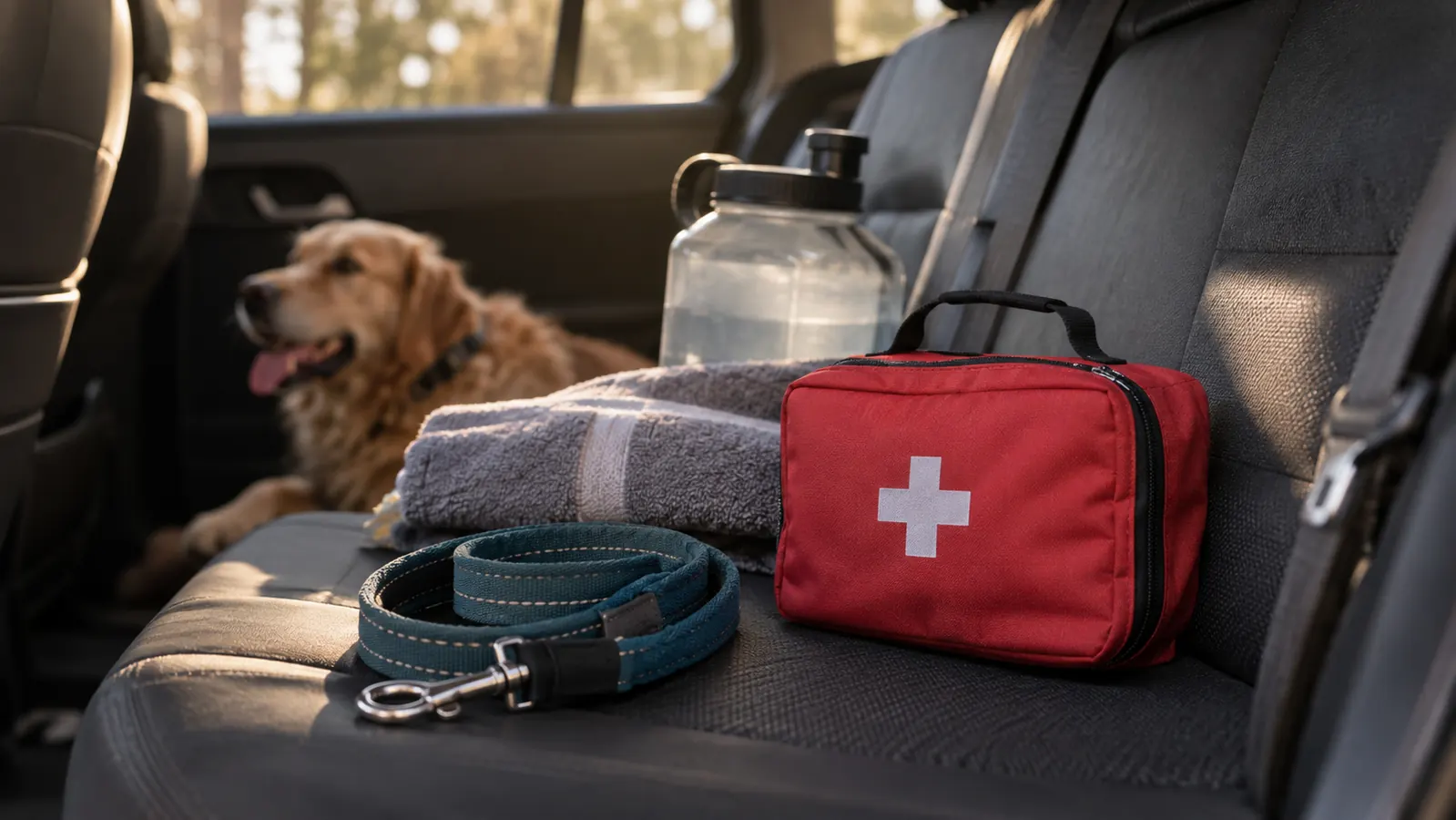
The question came from Dr. Lindqvist, not from me. I was sitting in her exam room in Decorah with Murphy for his yearly check, and she asked what I keep in the car for the dogs. I said a jug of water and an old towel, which is the truth. She waited. That silence is how I ended up buying the ARCA PET First Aid Kit in March 2025, and how I ended up opening it for real four months later at a rest area in South Dakota.
I ran a small hardware store in Decorah for 29 years before I sold it in the spring of 2023, so I am not easy to sell a bag of supplies to. I read the label. I count what is inside. I check the return policy before I read the reviews. This kit is 75 pieces in a nylon case that measures 8.5 by 6.5 by 3.25 inches and weighs about a pound and a half. Some of those 75 pieces are genuinely useful. Some are basic. Here is what is in the case, what we actually used, and what I would tell you before you buy one.
The Quick Verdict
A well organized car kit with a handbook worth reading before you need it. Two of the 75 pieces earned their place in one summer. A few of the rest are basic, and none of it replaces a call to your vet.
Amazon Check Today's Price →The case that was under my seat the day Dot cut her pad
75 pieces in a nylon case 8.5 by 6.5 inches, with a pet first aid handbook, an emergency muzzle, a tick removal tool, a leash, a flashlight and antibiotic ointment. It has lived under my driver's seat since March 2025.
Amazon Check Today's Price on Amazon →How I've Used It
The tick came first. We were at Backbone State Park in June 2025 for our one tent weekend of the year, and Murphy came out of the tall grass with something dug in behind his ear. I got the tick removal tool out of the case, worked it under the tick the way the handbook shows, and it came out clean in one pull. I put the tick in a small zip bag to keep, which is my own habit and not something the kit tells you to do, and I watched the spot for a few days after. That was the first time the case came out from under the seat in four months.
The second time was worse. We were driving home from the Black Hills in July 2025 and stopped at a rest area in South Dakota to let all three dogs out. Dot, my border collie mix, cut a front pad on broken glass in the grass. She did not yelp. She just started holding the foot up and leaving little marks on the pavement, which is how I knew before I saw anything.
I rinsed the pad from the gallon jug of tap water I carry, then used gauze and a bandage from the kit to wrap it well enough to finish the drive. The next morning I took her into Dr. Lindqvist's clinic in Decorah. She said the cut was shallow and healing fine, no stitches, keep it clean and dry. Two uses in four months, on two different dogs, out of one case that stays under the driver's seat whether I remember it is there or not.
I want to be honest about the limits of that story, because it would be easy to dress it up. Neither of those was a crisis. A tick and a shallow cut are the two most ordinary things that happen to a dog on a road trip. If the glass had gone deeper, or if the tick had been on a dog that reacted badly, the kit would have bought me time to reach a vet and nothing more. That is the job I bought it for. It is not a substitute for Dr. Lindqvist, and I have never pretended otherwise.
What Is Actually Inside the Case
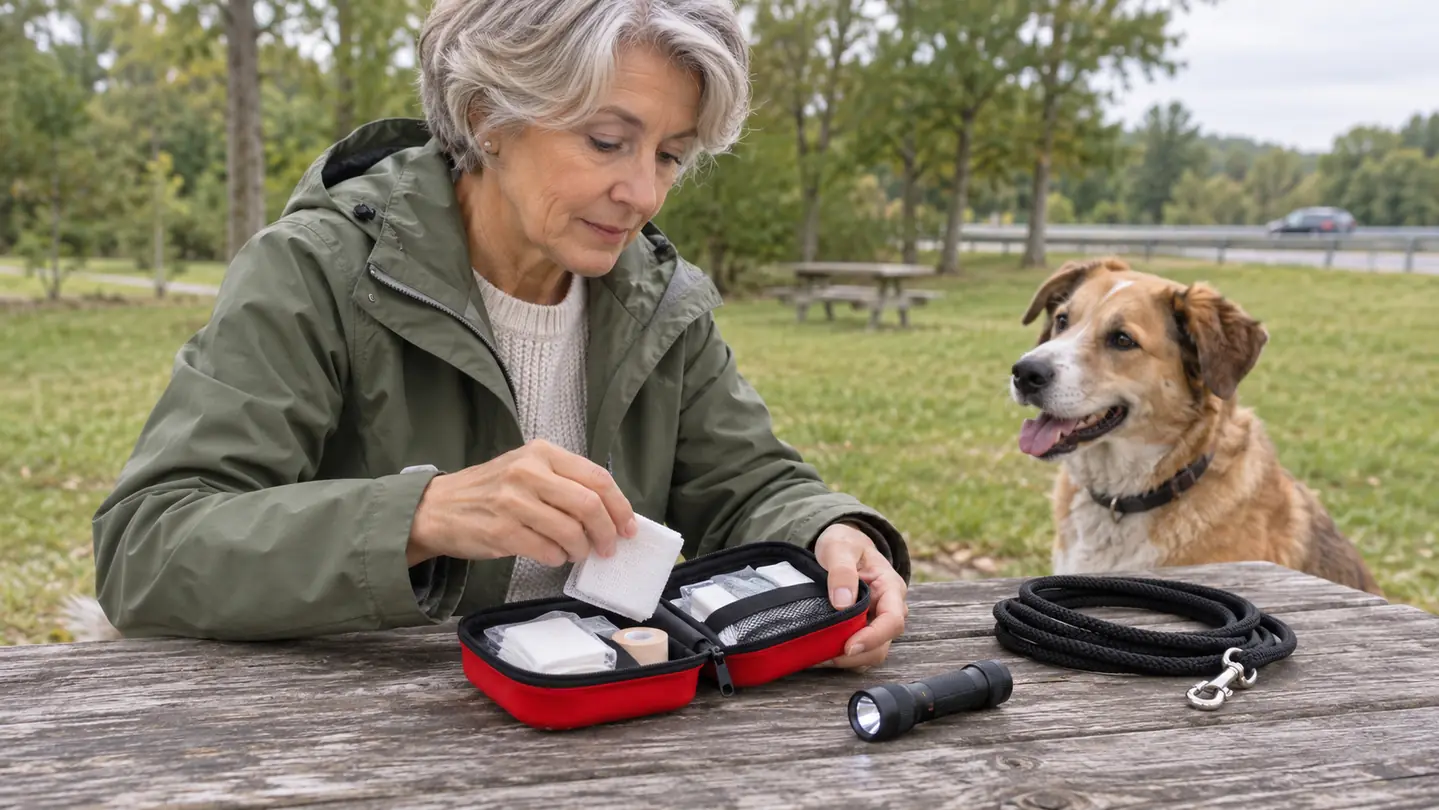
The listing names these pieces: a pet first aid handbook, an emergency muzzle, a tick removal tool, a leash, a flashlight and antibiotic ointment. The rest of the 75 pieces are the ordinary supplies you would expect, with gauze and bandages among them. The ARCA PET case itself is nylon, it is water resistant rather than waterproof, and it has reflective printing on the outside, which matters more than it sounds like it should when you are crouched in a parking lot at dusk.
There is also a mini pouch inside the main case. That is the piece I use most, and I use it more for walks than for the car. I moved it into my walking bag in April 2025 and it has stayed there since. When Dot cut her pad it was the big case that came out, but for a scrape on a sidewalk the little pouch is enough and I do not have to unpack anything.
The case holds its shape. I have had soft bags collapse into a puddle of straps in a door pocket, and this one does not do that. The 8.5 by 6.5 by 3.25 inch footprint slides under the driver's seat of my Highlander and stays put. At about a pound and a half I forget it is down there until I need it, which is exactly what I want from something I hope not to touch.
What I would tell you before you buy one: open it on the kitchen table the day it arrives and go through every piece. I did not, at first. I put it under the seat still packed and told myself I would learn it later. That was a bad plan, and it is the complaint I would lead with if a friend asked me about this kit at the kitchen table.
The Parts I Have Not Needed Yet
The emergency muzzle has never been used. I have taken it out, looked at it, and put it back. The handbook says it is for a dog in pain that might bite, and I believe that, but I also know my three. Biscuit would bite a sandwich before she would bite a person. Murphy is too easygoing to bother. Dot is the one I would reach for it with, and only if she were hurt badly enough that she did not know what she was doing. I keep it because the day I need it I will not have time to improvise one out of a shoelace.
The flashlight works, and I have used it for things that had nothing to do with dogs, including finding a dropped earring in a motel room in Door County. The leash stays coiled in the case as a spare. A spare leash is not a silly thing to carry when you have three dogs and one of them has strong opinions about squirrels.
The antibiotic ointment has not been opened. I am careful with that one. I do not put anything on a dog without asking Dr. Lindqvist first, so the ointment sits in the case as something to have in an emergency rather than something I reach for on my own judgment. If you are the sort of person who wants to treat first and ask later, that is your call, but I would call the clinic.
The handbook is the piece I would pay real attention to. It covers everything from snake bites down to minor cuts, and it is written plainly enough that I could follow the tick section at a picnic table with a dog squirming under one arm. But I had to read it at home first to know what was in the case at all. That is my honest complaint. The case is not labeled piece by piece on the outside, so your first ten minutes with this thing are a small puzzle.
Two uses in four months, on two different dogs, out of one case that stays under the driver's seat whether I remember it is there or not.
What the Listing Says, and What I Can Tell You
The listing says the kit is vet reviewed and made in a medical facility. I cannot verify either of those claims. I am not a vet, I have never seen the facility, and I have never tested anything the way a professional tester would. What I can tell you is that the handbook reads like it was written by somebody who has handled nervous animals, and that Dr. Lindqvist did not laugh at the contents when I showed her the case.
The listing also says water resistant, and I believe that one, because the case spent a June weekend in a tent at Backbone and came out dry inside. It sat under a seat through a South Dakota July and nothing in it melted or went off, which is more than I can say for the crayons I once left in the same spot. I would not dunk it in a river and expect the same result. Water resistant is not waterproof, and that difference matters when you are near water with three dogs.
The reflective printing on the outside is the third claim I can back up from my own use. It catches a headlight or a flashlight beam. If you have ever dropped something in a rest area after dark, you know why that is worth having on a case you are trying to find on the floor of a vehicle.

How It Rides in the Highlander
The case lives under the driver's seat of my silver 2019 Highlander. That is not a glamorous spot, but it is the right one. It is reachable from the driver's door without getting out, and it does not slide around, because the case is stiff enough to stay where I put it. The mini pouch lives in my walking bag instead, and I have never once regretted splitting them up that way.
The dogs ride on the second row, all three of them. Biscuit is behind me, Dot is in the middle, Murphy is behind the passenger seat, and Gene rides up front when he comes along, which is about half the trips. The kit is not in the dogs' space at all, and that is deliberate on my part. A first aid kit that a nervous dog can nose open on the highway is not a first aid kit, it is a mess.
I check the case twice a year, once in late spring before the September trip to Door County and once in January when there is nothing else to do in Iowa. I go through it, count what is still there, and pull anything the heat has gotten to. Sitting under a seat through an Iowa summer is not kind to supplies. That is my habit and not a manufacturer instruction, but anybody who leaves a kit in a car year round should borrow it.
Where It Falls Short
Some of the contents are basic, and I will not pretend otherwise. If you already own a well stocked medicine cabinet and you know how to use what is in it, a good part of this case duplicates what you have at home. What you are buying is the packaging and the organization: one case, one handbook, in a form you can grab with one hand when your other hand is holding a dog.
The other thing to know is that 75 pieces sounds like more than it is. Some of those pieces are small. A few gauze pads count as a few pieces. Do not buy this expecting a veterinary clinic in a bag, because it is not one, and the ARCA PET handbook is honest about that in the sections I have read.
And it does not replace a phone call. My rule, and I have stuck to it, is that anything past a tick or a surface cut gets a call to Dr. Lindqvist's clinic before I do anything else. The kit bought me time to get Dot to Decorah the next morning. It did not diagnose her, and it did not treat her.
What I Liked
- The handbook is written plainly enough to follow with a dog squirming under one arm
- The case holds its shape and stays put under the driver's seat instead of collapsing
- The tick removal tool worked on the first try, one clean pull on Murphy
- The mini pouch is the piece I use most and it lives in my walking bag
- Water resistant nylon with reflective printing that catches a light after dark
- 8.5 by 6.5 by 3.25 inches and about a pound and a half, so it stores anywhere
Where It Falls Short
- No piece by piece labeling on the case, so the first look through it is a puzzle
- Several contents are basic and duplicate a stocked medicine cabinet
- 75 pieces is a smaller kit than that number suggests
- I have never needed the emergency muzzle, so I cannot tell you how it fits a 46 pound dog
- You still need a vet, and the kit does not change that
Who This Is For
This is for the person who drives with dogs and has nothing in the car but a jug of water and an old towel, which was me in February 2025. If you take regular trips, even short ones, and you are the one doing the driving, one case with a handbook is a reasonable thing to own. It suits people who want a single thing to grab instead of assembling a bag from a closet while a dog is bleeding on the pavement.
It also suits a household with more than one dog, because one case covers all three of mine. And it suits anyone whose vet has ever asked a question like the one Dr. Lindqvist asked me, because that question is not really about supplies. It is about whether you have thought past the water jug.
Who Should Skip It
Skip it if you already carry a properly stocked kit that you built yourself and know piece by piece. You will not get much here that you do not already have, and paying again for gauze you own makes no sense. Skip it if you want a kit to stand in for veterinary care, because it will not, and no kit will.
And skip it if you are not going to open it. A first aid kit you have never unpacked is just a bag of unknown objects with a handle. I nearly was that person. The tick at Backbone would have gone much worse if I had been digging through 75 pieces for the first time in tall grass at dusk, and that is the whole reason the ARCA PET handbook got read on my kitchen table in March.
One case, under the seat, before you need it
March 2025 was the month I finally listened to Dr. Lindqvist. The tick came in June and the glass came in July. I would rather have bought the ARCA PET First Aid Kit a year earlier than have bought it on the day I needed it.
Amazon Check Today's Price on Amazon →