
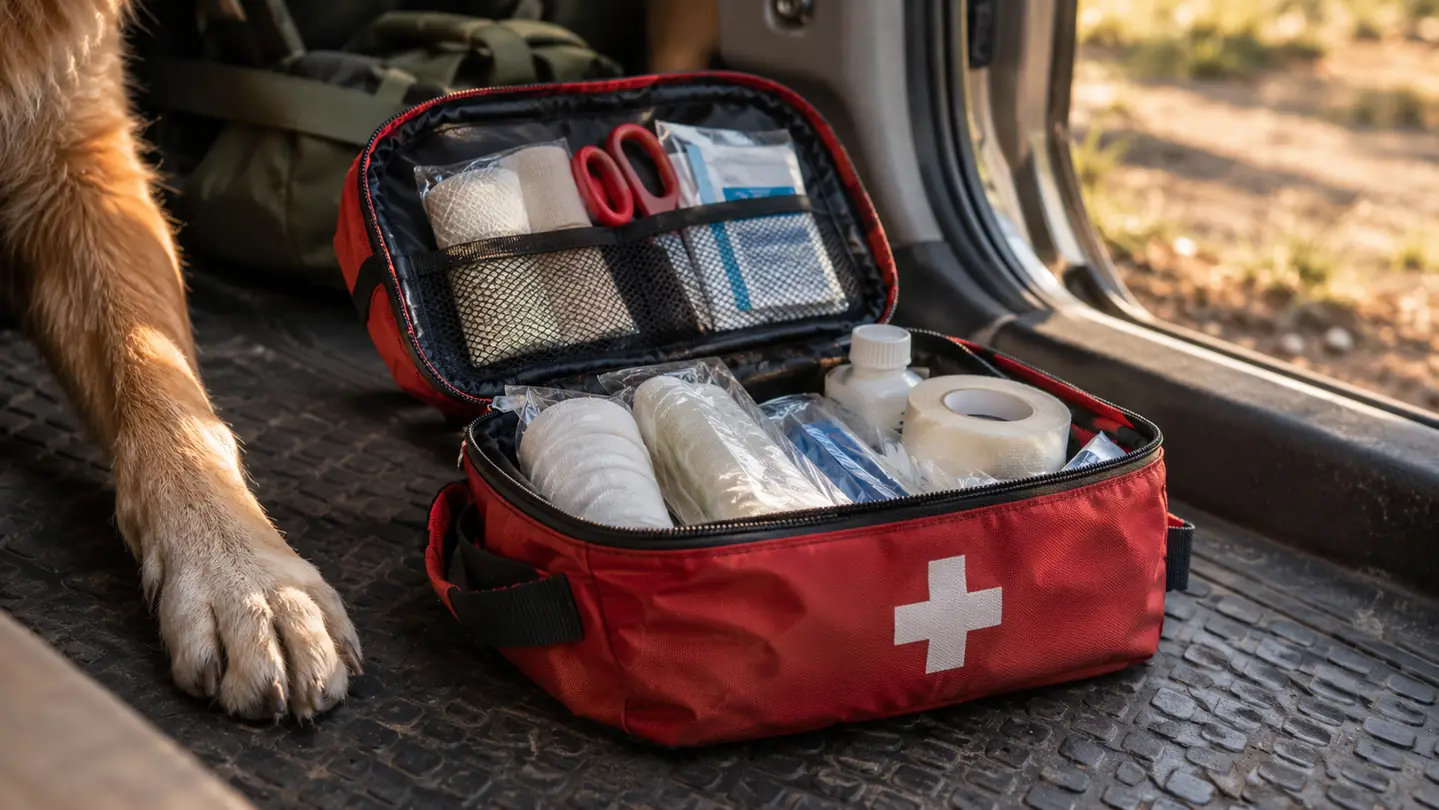
I bought the ARCA PET First Aid Kit in March 2025 because Dr. Lindqvist asked me a question I could not answer. We were at the clinic in Decorah for Dot's yearly check, and she asked what I kept in the car for the dogs. I said water and a couple of old towels. She looked at me the way a woman looks at you when the answer is no.
So I went home and ordered one. It has been under the driver's seat of our 2019 Toyota Highlander ever since, through a June tent weekend at Backbone State Park and a July drive out to the Black Hills. I have used it twice for real. This is what I would want to know if you were sitting across from me and asking whether it is worth the money.
Here is the thing nobody puts in the reviews: a first aid kit is a purchase you make against a day you hope does not come. You cannot judge it by how it performs, because most of the time it does nothing at all. You judge it by whether you know what is in it before you need it. That turned out to be the whole story for me.
The Quick Verdict
A genuinely useful kit that lives in the car without taking up space. The catch is the manual, not the contents.
Amazon Check Today's Price →The kit I should have bought two years before I did
Seventy-five pieces in a case that fits under a seat. Read the handbook at home first, the way I should have.
Amazon Check Today's Price on Amazon →What Nobody Tells You: The Kit Does Not Teach You Anything
I ran a hardware store for twenty-nine years, so I know how to open a box and read a label. When the ARCA PET case arrived I unzipped it on the kitchen counter, looked at everything, zipped it back up, and put it in the car. I felt prepared. I was not prepared. I was organized.
There is a difference. Being organized means the supplies are in one place. Being prepared means you know which item you would reach for, in what order, and what you would leave alone. I did not know any of that. I had a handbook sitting right there in the case and I had not opened it.
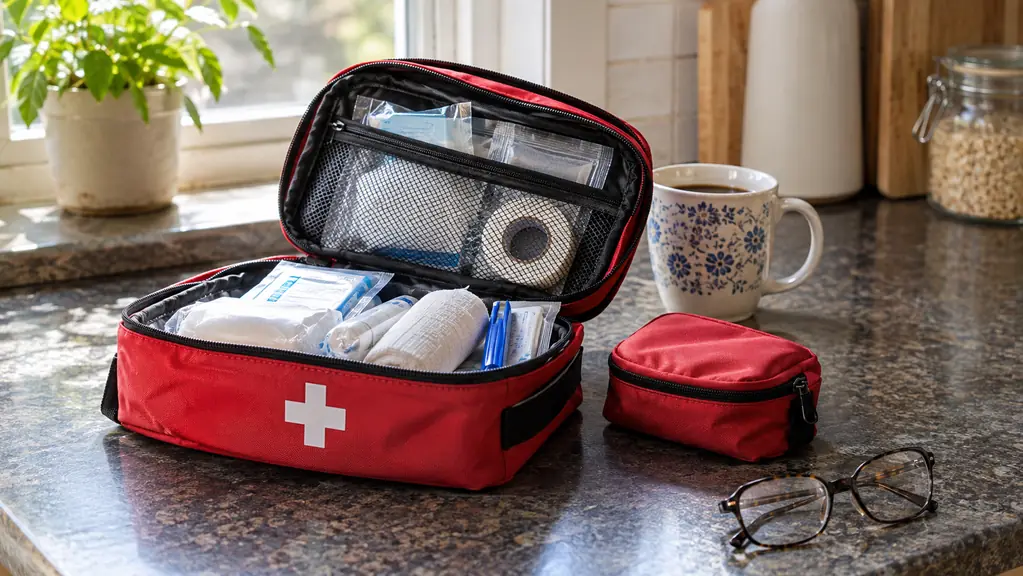
A few weeks later I sat down with it at the kitchen table with a cup of coffee and read the whole thing. That took maybe twenty minutes. It is a plain manual, not a textbook, and it covers the situations a person actually runs into with a dog in a car or a tent. Snake bites, minor wounds, the small stuff. That twenty minutes was the most valuable part of the purchase, and I almost skipped it.
So my honest advice, before anything else in this review: buy the kit if you want, but plan to spend one evening with the handbook before it goes in the car. If you will not do that, you are buying a bag of things you cannot use under pressure.
What Is Actually In It
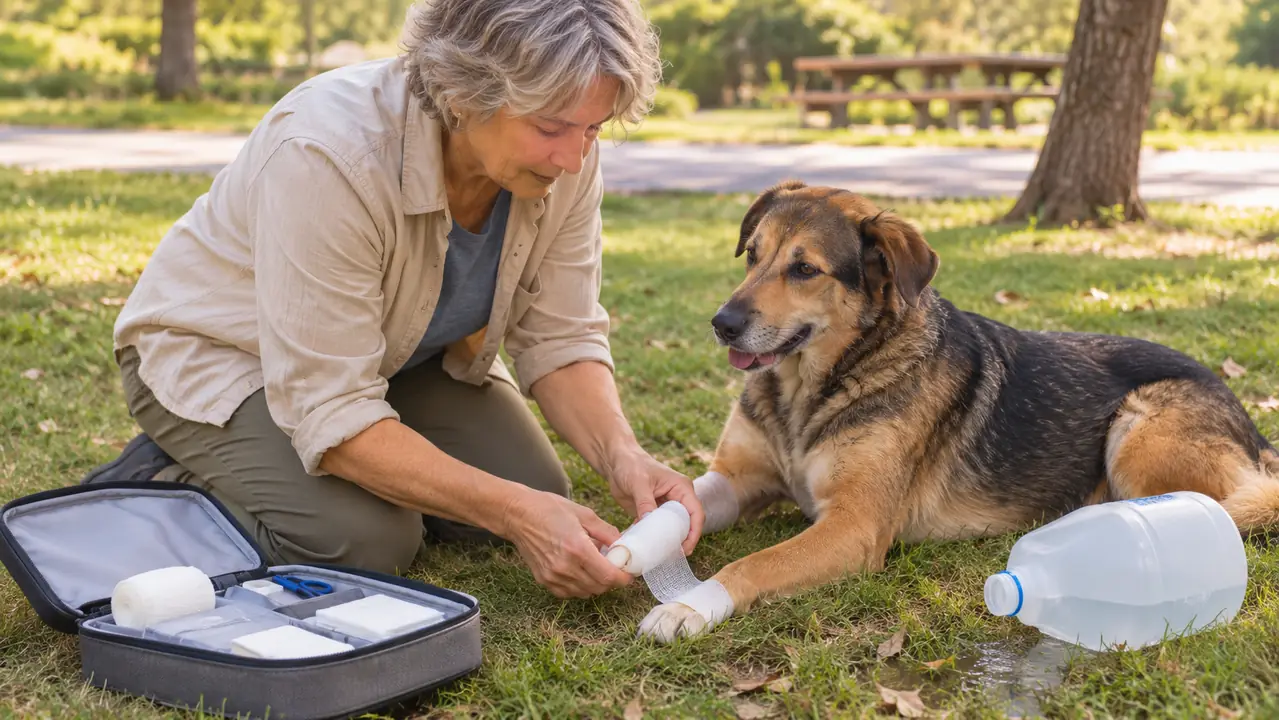
The case is nylon, water resistant, and small. Eight and a half inches by six and a half by three and a quarter, a pound and a half on the scale. It slides under the driver's seat and I do not notice it is there until I reach for it. There is reflective printing on the outside, which matters more than I expected the one time I was kneeling on grass at dusk.
Inside, the pieces I actually use are a first aid handbook, an emergency muzzle, a tick removal tool, a leash, a flashlight, and antibiotic ointment, plus the plain gauze and bandage material. There is also a small mini pouch that comes out separately, and that pouch is the part I use most. It goes in my walking bag now, so the tick tool and a little gauze travel with me on ordinary mornings and not just on trips.
The emergency muzzle has never been used. I want to be honest about that rather than pretend I have tested it. What I can say is that it is in there, and that having something to put over a hurt dog's nose is one of those items you do not think about until you are the person who wishes they had one. A dog in pain does not always behave like your dog.
The flashlight is small and lives in the case. I have not needed it in an emergency. I have used it to find a dropped earring under a motel bed, which is not what it is for but tells you it works.
One case, one spot under the seat, no more guessing
Seventy-five pieces, a handbook, a muzzle and a tick tool in a case the size of a paperback. It is the not-knowing that costs you.
Amazon See the full contents on Amazon →The Two Times I Actually Opened It
The first was a tick on Murphy at Backbone State Park in June 2025. He had been through the grass down by the water and I found it on his shoulder while I was brushing him out. I got the tick removal tool out of the mini pouch, did what the handbook says to do, and that was the end of it. No drama. But I want to be clear about what that moment would have looked like without the kit: me, at a picnic table, with tweezers from a toiletry bag and no idea whether I was doing it right. The tool and the twenty minutes I spent with the manual are why it took two minutes instead of twenty.
The second was the one that mattered. July 2025, driving home from the Black Hills, we stopped at a rest area in South Dakota. I put all three dogs out on leashes in the grass like always. Dot came up lame on a front leg. She had put her foot down on broken glass somebody had left in the grass, and she had cut the pad.
I got her back to the car and had Gene hold her while I worked. I rinsed the pad with water from the gallon jug I carry, then used gauze and a bandage from the ARCA PET case. That is the entire extent of my field medicine. Rinse, gauze, bandage. I did not dig in the case for anything exotic because I did not need anything exotic, and I would not have known how to use it if I had.
We drove on home and I took her to Dr. Lindqvist's clinic the next morning. She said it was shallow, that it was healing fine, and that no stitches were needed. She changed the bandage and sent us home. I have thought about that rest area a lot since. The kit did not save a life. It turned a frightening twenty minutes into a manageable one, and it meant Dot rode home with a clean dressing instead of an open cut on a dirty floor mat.
The kit did not save a life. It turned a frightening twenty minutes into a manageable one.
Where the ARCA PET Kit Falls Short
Some of what is in the case is basic. Gauze is gauze. I could have assembled most of this myself from the store I used to own, and I would have spent less. What I would not have had is the handbook, the muzzle, the tick tool and a case with a shape that fits under a seat, all sorted and in one place, on the day I needed it. That is what the extra money buys. Whether that is worth it to you depends on whether you are the kind of person who assembles things or the kind who means to and does not.
The other complaint is smaller and more annoying. Until I read the manual, the case was a black box to me. Seventy-five pieces sounds like a lot and it is, but a count is not information. I could not have told you where the antibiotic ointment was without opening every compartment. The case has no labeling that tells you what is where, so the sorting is on you. I ended up putting a rubber band around the gauze so I could find it by feel.
There is also nothing in this kit that replaces a vet. I want to say that plainly because I have read reviews of first aid products that read like the product is a substitute for medical care. It is not. It is what you use to keep a bad situation from getting worse on the way to the clinic. In Dot's case that meant a rinse, a bandage, and one night of waiting until morning.
Buy it for the drive, not for the shelf
It lives under the seat without complaint and it was there on the day it needed to be. Twenty minutes with the handbook and you are genuinely set.
Amazon Check Today's Price on Amazon →What I Liked
- Compact enough to slide under a driver's seat and stay out of the way until it is needed
- The handbook is short enough to actually read, about twenty minutes on a first pass
- The mini pouch comes out, so the tick tool and some gauze travel in a walking bag
- The emergency muzzle is in there, which is the item people forget about
- Water resistant nylon with reflective printing, which helps at dusk
- Tick removal tool worked cleanly the one time I used it
Where It Falls Short
- Most of the pieces are basic supplies you could assemble yourself for less
- No labeling inside the case, so you have to sort it and remember where things are
- The count alone does not teach you anything; the value is in the manual, and only if you read it
- Nothing here substitutes for a vet, and the kit is not a reason to skip one
How It Fits With the Rest of My Car Setup
I did not buy this in a vacuum. The harnesses came in May 2024, the hammock a month later, the beds that August, the first aid kit in March 2025, and the water bottles in April before the Black Hills trip. George and I did not plan that order. It was one problem at a time.
The kit earns its place in that lineup because it is the only piece that is not about comfort or containment. The hammock keeps Murphy's mud off the seats. The harnesses keep Dot from climbing over the console. The beds keep the three of them settled in a strange motel room. The kit is the one thing in the car I hope stays zipped up forever, and it is also the one thing I would replace first if it went missing.
If you are building this out the way I did, my honest suggestion is to buy the kit earlier than I did. It does not need the rest of the gear to make sense. It needs to be in the car before the trip, not ordered after the trip where something went wrong.
Who This Is For
This is for the person who drives with dogs and has never once thought about what they would do at a rest stop if one of them came up hurt. If your current plan is a bottle of water and a roll of paper towels, this is an upgrade in a way that costs you one evening of reading. It is also for the person who already owns a home kit and wants something that stays in the vehicle, because carrying a home kit out to the car and back in again is exactly the kind of thing a person stops doing.
It suits a hiker or camper with a dog, too. The case is small enough to go in a pack and the reflective printing is not decoration. But the person who benefits most is the everyday driver, the one doing the two-hour runs to a motel in Door County every September, because that is where most of the small injuries actually happen: a rest area, a parking lot, a strip of grass by a gas station.
Who Should Skip It
If you already keep a well-stocked kit in the car and you know what is in it, you do not need this. You are already doing the thing this product is trying to get people to do. If you have a dog with an ongoing medical condition and your vet has given you a specific plan with specific supplies, follow that plan and add what she tells you to add. This kit is general purpose, not a prescription.
And if you know yourself well enough to know you will not read the handbook, think hard before buying. It is still a reasonable bag of supplies sitting in your car, but you will be paying a premium for organization you will not use. I say that as a woman who left hers zipped for weeks before she sat down with it.
The Bottom Line
I have had the ARCA PET kit in the car for about a year and a half. It has been opened twice for real, once for a tick and once for a cut paw, and both times it did what I needed it to do. The case has held up, the zippers still work, the reflective printing has not peeled, and nothing inside has leaked or rusted in a vehicle through an Iowa summer and an Iowa winter, which is a genuine test of anything with metal in it.
My rating is four and a half out of ten, no, that is wrong, four and a half out of five. The half star comes off for the basic contents and the lack of labeling inside, and I would take it back in a second if the handbook were missing. It is not missing. It is the best part, and it is the reason I would buy this again instead of assembling a kit myself from a hardware store shelf.
If you take one thing from this review, take the boring thing: read the handbook the night it arrives. Then put the case under the seat and forget about it. The forgetting is the point. You want it there and unopened, and on the day it isn't, you want to already know where the gauze is.
The twenty minutes you spend with the handbook is the purchase
The rest is gauze in a small case under the seat, waiting. It waited eleven months for me. I would rather it had waited less.
Amazon Check Today's Price on Amazon →