
Most dog emergency advice is written for people who have time to think. On the road you do not. You have a narrow shoulder, a dog who is suddenly not acting like herself, and traffic going past at sixty miles an hour. I know that feeling. My name is Peggy Rausch, I am 63, I live just outside Decorah, Iowa, and I ran a small hardware store there for 29 years before I sold it in the spring of 2023. I am not a vet and I am not a trainer. What I am good at is reading a label and knowing what is inside the box before I need it.
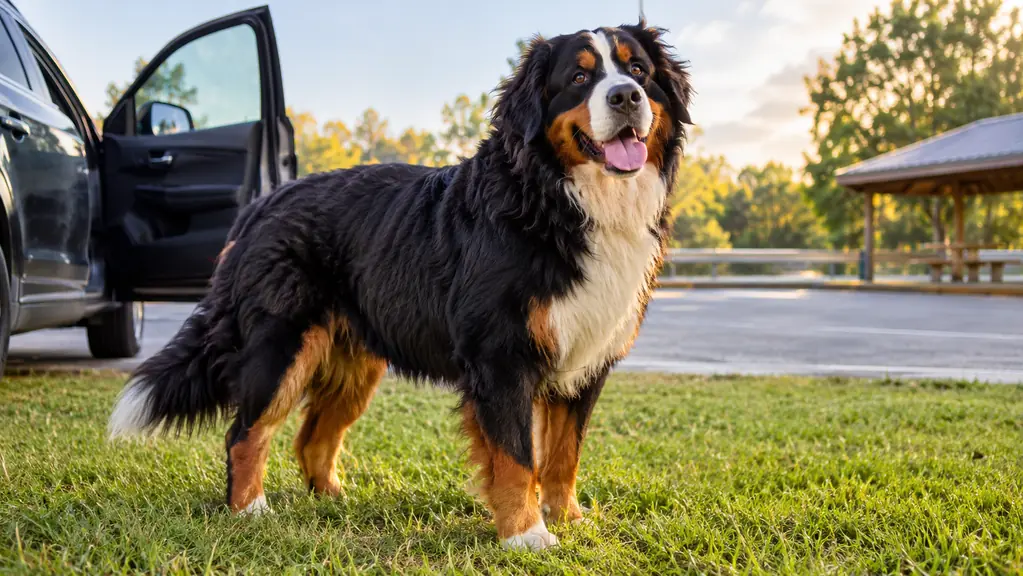
That skill turned out to matter more in the car than I expected. In March 2025, after our vet, Dr. Lindqvist, asked me a plain question about what I carried for the dogs on trips, I bought an ARCA PET first aid kit and put it under the driver's seat of our silver 2019 Toyota Highlander. Three dogs ride in that car: Biscuit, a 9 year old beagle mix, Dot, a 5 year old border collie mix, and Murphy, a 7 year old Lab mix. They have been to Door County, to the Black Hills, and to Backbone State Park. Nothing has gone badly wrong. But something did go wrong once, and I learned more from that one afternoon than from anything I ever read.
The case under my seat for the stop where nothing else is open
The ARCA PET first aid kit is a water resistant nylon case with reflective printing over a hard case, 8.5 by 6.5 by 3.25 inches and about 1.55 pounds. It holds a pet first aid handbook, an emergency muzzle, a tick removal tool, a leash, a flashlight, and antibiotic ointment, plus a mini pouch I keep in my walking bag.
Amazon Check Today's Price on Amazon →Step 1: Decide what the kit is for before you buy one
A first aid kit is not a vet. It is a way to keep a bad thing from getting worse while you get somewhere. That distinction decides what you carry. The problems that end a car trip early for us are not exotic: a cut pad on broken glass, a tick, a torn nail, a dog who threw up in the back seat and needs water, a sting at a rest stop. I built the car around those, not around what sounds impressive.
What sold me on the ARCA PET kit was that the pieces were arranged for a travel problem instead of a clinic. A first aid handbook, an emergency muzzle, a tick removal tool, a leash, a flashlight, and antibiotic ointment. The flashlight matters more than it sounds. A tick check at a motel at dusk is not a job you want to do with a phone clamped in your teeth.
I read the handbook at the kitchen table before I ever needed it, and that is my one real complaint about the kit. I had to sit down at home and learn what was in the case, because reading it crouched beside the car is not realistic. Do that part at home. It takes one evening, and it is the whole difference between owning a kit and having one.
Step 2: Put it where your hand goes, not where it looks tidy
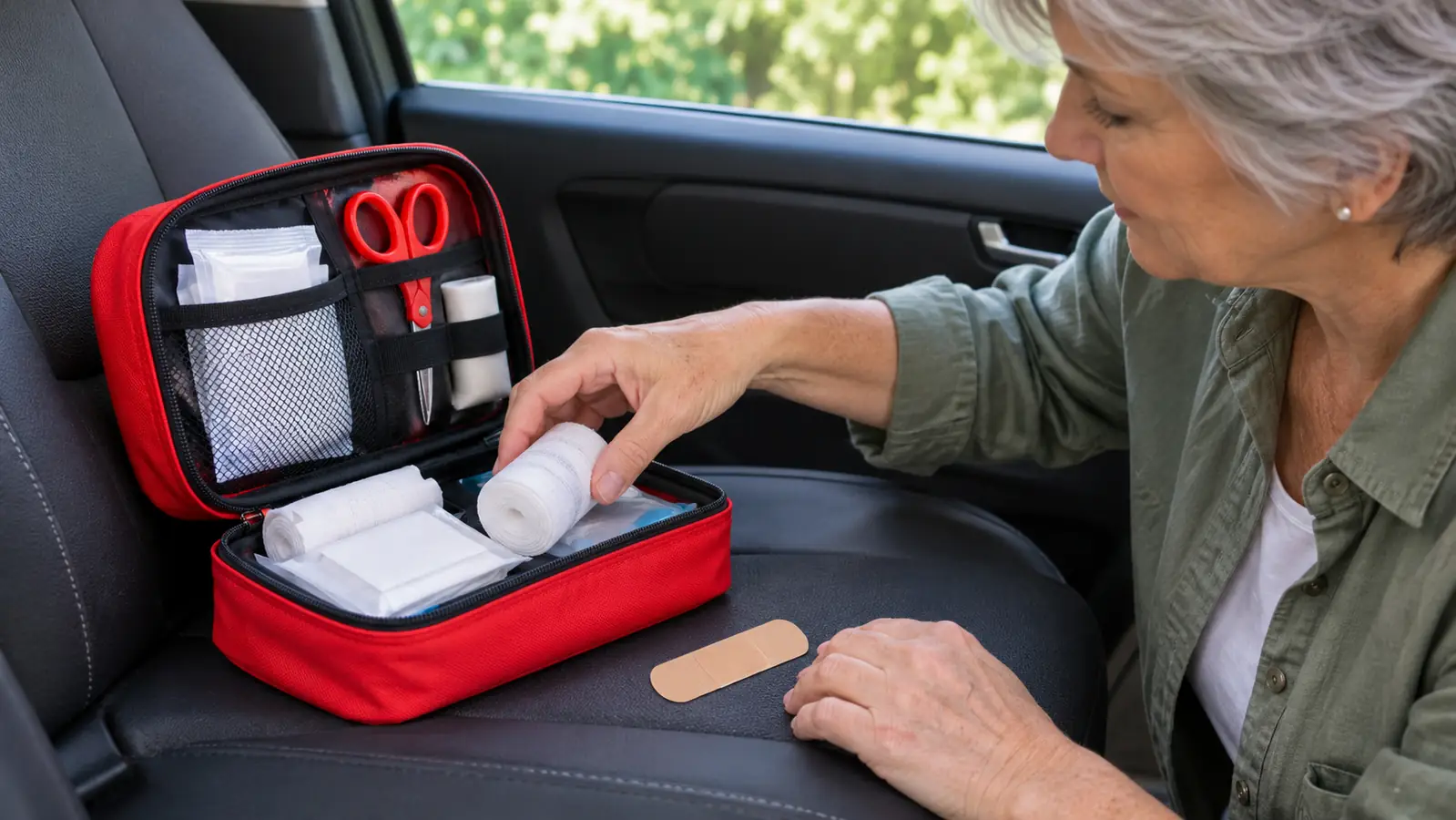
Mine lives under the driver's seat. Not in the cargo area, not in a tote with the water and the treats. Under the seat, where my right hand can drop down and find it while I am still sitting in the driver's seat with the engine off. Test this yourself before your next trip. Sit down, put your hand out, and see whether you touch it.
The case is 8.5 by 6.5 by 3.25 inches and weighs about 1.55 pounds, so it slides under a seat without a fight and does not turn into a projectile if I stop short. The mini pouch is meant to come out on its own, and mine lives in my walking bag. That way, at a rest stop, the tick tool and the bandage roll walk away from the car with me instead of staying locked under a seat.
Gene rides up front with me on about half our trips, and he has never once had to hunt for the kit, because it never moves. That is the entire trick. A kit that changes location is a kit you will not find. If your dog rides behind the passenger seat the way Murphy does and you are the one driving, put the kit under your own seat, not on the side where a dog already takes up the floor.
A first aid kit is not a vet. It is a way to keep a bad thing from getting worse while you get somewhere.
Step 3: Flush the wound before you reach for anything else
Here is what actually happened. July 2025, driving home from the Black Hills, we stopped at a rest area in South Dakota. There was grass, there was a trash barrel, and there was broken glass in the grass that nobody had picked up. Dot came back to me holding a front paw off the ground. She is my anxious one, the border collie mix, and she does not complain about anything. That was how I knew it was real.
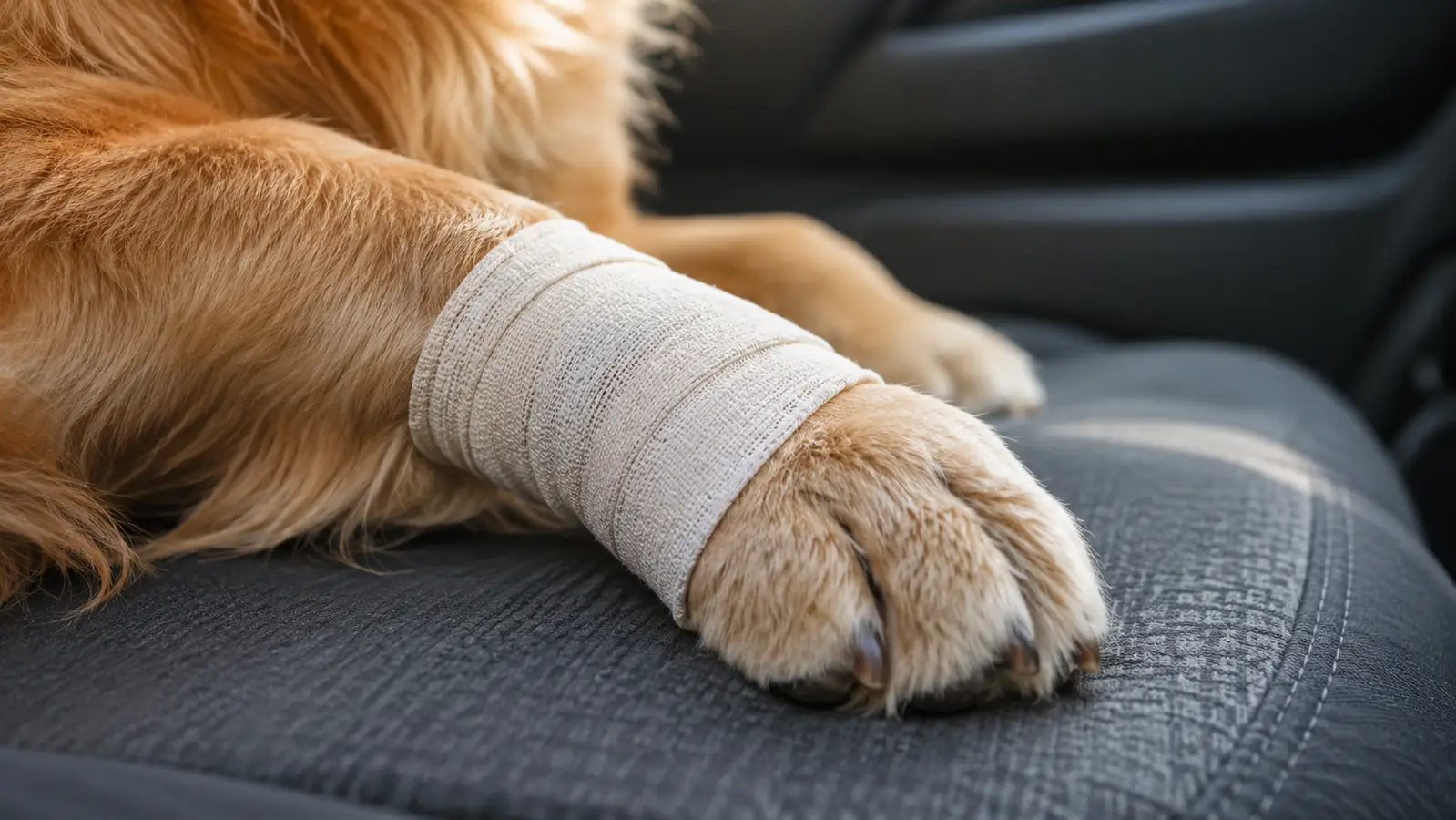
I did not open the kit first. I opened the water. I carry a plain gallon jug of tap water from home in the back, and I poured it over that paw until the grass and the grit were gone and I could see the cut for what it was: shallow, across the pad, not spurting. Only then did the gauze and the bandage come out of the ARCA PET case. Flushing first is the part people skip, and it is the part that matters most.
Do not go digging at a wound at a rest stop. Do not reach for anything in a kit that is not plain gauze or a bandage unless you know exactly what it is for. I wrapped the paw, I lifted her into the car, and I drove. If the bleeding had not slowed, if the pad had been laid open, if she had gone lame on it, I would have been looking for a clinic in South Dakota instead of heading home. That is the honest dividing line, and it is not a line I get to move because I am tired and want to be in my own kitchen.
Step 4: Muzzle a hurt dog, including your own
The emergency muzzle in the case has never been used on my dogs. I want to be clear about that, because I am not going to tell you a story that did not happen. But it is the item I think about most. A dog in pain does not know you are helping. Dot is 38 pounds of nervous energy on a good day, and Murphy is 46 pounds of Labrador who has never bitten anything in his life, and neither of those facts means much when something genuinely hurts.
If you ever have to do it, do it early. Put the muzzle on while the dog is still confused, before you start poking at the injury. One that goes on after the first yelp goes on after the first bite. Clip the leash from the kit on at the same time, because a dog who has decided she wants away from you will get away from you, and a rest area has cars coming through it.
This is not a substitute for a vet. It is a way to get a dog into the car and to a clinic without adding a second injury to the list. If a dog is screaming, if a limb sits at an odd angle, if you can watch swelling grow, you stop and you call. You do not muzzle the dog and drive four hours home because the trip is nearly over. The kit buys time. It does not replace a clinic, and it never will.
Step 5: Call the vet before you have decided how bad it is
We drove home that night and I called Dr. Lindqvist's clinic first thing the next morning, and she saw Dot that same day. She told me the cut was shallow and healing fine, and there were no stitches. That was the answer. But I did not know the answer while I was crouched on the grass at that rest area. I called because I could not tell, not because I could.
That is my advice in one line. You call because you cannot see what a vet can see. I do not give doses and I do not give treatments, because I am a retired hardware store owner and not a veterinarian. Anyone online handing you a dose for a dog they have never laid hands on is guessing with your dog's liver.
Have three things ready before you dial: the dog's weight, what happened and when, and what you have already done. Murphy is 46 pounds, Dot is 38, Biscuit is 30, and I can tell a clinic all three without looking anything up. Write your dogs' weights on an index card and keep it in the glove box next to the registration. It is a five minute job and it saves ten minutes of fumbling on a bad morning.
What Else Helps
The kit is one piece of a car that works. The rest matters too. Our three ride in harnesses clipped to the seat belts, which means a hurt dog is already fairly contained when I open the back door. It also means I am not chasing a loose dog across a rest area with traffic coming through. The hammock covers the second row and comes down only for washing, and the dogs stay buckled underneath it. None of that is first aid, but it is the reason a first aid job stays small.
Water is the other thing I would not travel without. I carry two 18 ounce bottles with a fold cap that doubles as a bowl, and I still carry that gallon jug of tap water from home. Eighteen ounces does not cover three dogs on a warm day, and a cut pad takes far more water than you would guess. The travel beds roll into their stuff sacks and ride in the cargo area, so a dog who needs to stay quiet in a motel room has somewhere familiar to lie down instead of pacing a stranger's carpet all night.
And know where the clinics are. Before we leave, I find one 24 hour practice along the route and Gene writes it on the same card as the weights. I have never needed it. I would still rather have it written down than be squinting at a phone on the shoulder of a highway with a dog in the back. That card and the case under my seat are the whole plan, and the plan has held for three seasons of trips.
The case that sat under the seat for four months and then earned its place in ten minutes
ARCA PET makes a vet reviewed first aid kit in a water resistant nylon case with reflective printing, sized to slide under a seat and stay there. Handbook, emergency muzzle, tick removal tool, leash, flashlight, antibiotic ointment, plus the mini pouch that goes in your walking bag.
Amazon See the ARCA PET First Aid Kit on Amazon →